In the era of automation and intelligent imaging, electronic focusing lenses have emerged as a game-changing technology across various sectors. These advanced optical components offer real-time autofocus capabilities, compact form factors, and seamless integration with imaging systems. Among the many fields benefiting from this innovation, the industrial and medical sectors stand out for their increasing reliance on precision and adaptability.
As a global innovator in optical imaging solutions, Lano Technology specializes in designing and manufacturing high-performance electronic focusing lenses tailored for demanding applications. In this article, we’ll explore the top applications of electronic focusing lenses in industrial and medical fields and how Lano’s solutions are empowering next-generation vision systems.
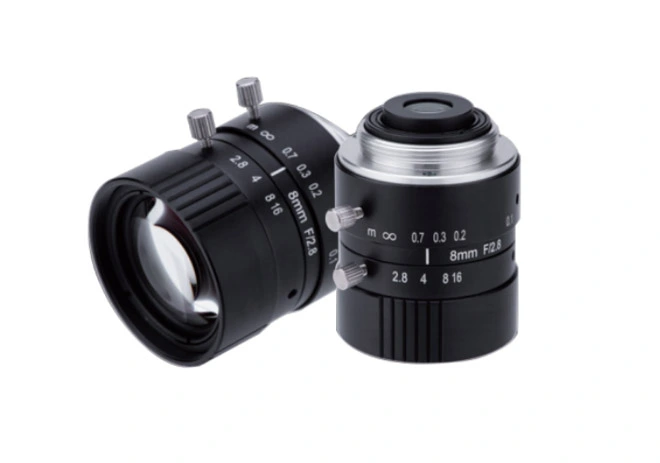
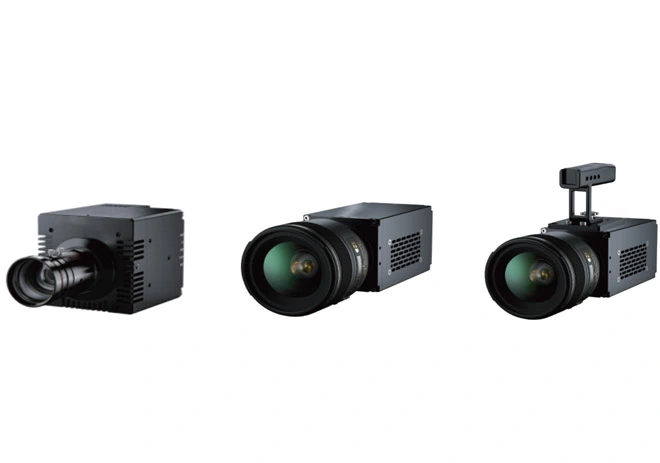
Electronic focusing lenses utilize motors or actuators to adjust the focal length automatically or upon command. Unlike manual or purely optical zoom lenses, these devices provide fast and precise focusing without physical manipulation. Lano Technology offers both auto-focus lenses and motorized zoom lens modules, optimized for integration into smart cameras, microscopes, and industrial sensors.
Key Features of Lano’s Electronic Focusing Lenses:
| Feature | Description |
|---|---|
| Autofocus Mechanism | Real-time focus adjustment with built-in sensors or software control |
| Compact Design | Suitable for embedded systems and limited-space environments |
| Customizable Focal Length | Ranges from 6mm to 100mm, supporting different image resolutions |
| High Temperature Stability | Engineered for durability in harsh industrial conditions |
| Plug-and-Play Integration | Supports interfaces like M12, M16, CS, or C-Mount |
In high-speed production lines, vision systems must inspect thousands of parts per minute with high precision. Lano’s electronic focusing lenses play a crucial role in machine vision systems, where depth of field and fast refocusing are critical.
Use Case: Electronics assembly inspection, PCB fault detection, precision machining.
Benefit: Reduced downtime due to autofocus, improved image clarity at varying distances.
In robotic arms and automated picking systems, real-time adaptation to changing object distances is essential. Lano’s motorized zoom modules enable seamless autofocus in dynamic environments, ensuring sharp visual feedback for AI algorithms.
Use Case: Robotic bin picking, warehouse automation, packaging inspection.
Benefit: Greater adaptability and accuracy in spatial recognition tasks.
Electronic focusing lenses are widely used in ANPR (Automatic Number Plate Recognition), toll gate monitoring, and smart city surveillance systems. Lano offers long-range auto-zoom lens modules tailored for outdoor deployment.
Use Case: Highway monitoring, vehicle identification, urban traffic analysis.
Benefit: Consistent image quality across various light conditions and distances.
Modern digital microscopes demand ultra-clear and highly detailed images across multiple magnification levels. Lano’s custom autofocus modules provide unparalleled clarity and consistency in live cell imaging and histopathology.
Use Case: Biomedical research, cancer diagnostics, clinical pathology.
Benefit: Hands-free focus control, which enhances workflow efficiency and reproducibility.
Minimally invasive procedures rely on compact, high-resolution optics that can adjust focus without manual intervention. Lano’s miniature focusing lens solutions can be embedded into endoscopic probes.
Use Case: Gastrointestinal endoscopy, laparoscopic surgeries.
Benefit: Improved depth perception and image sharpness in real time.
Electronic focusing lenses are integrated into retinal imaging and optical coherence tomography (OCT) systems, enabling precise eye examinations without user-induced distortion.
Use Case: Glaucoma screening, diabetic retinopathy detection.
Benefit: Automated focusing reduces variability and enhances diagnostic accuracy.
Lano Technology, headquartered in Shenzhen, China, has more than a decade of experience in developing intelligent lens modules and customized optical systems. Our core R&D strengths lie in:
Opto-mechanical design
Embedded lens motor control
Image processing and system integration
With over 70+ active patents, and an experienced team that includes optical engineers, hardware developers, and software architects, Lano is capable of delivering fully customized lens solutions for both OEM and ODM clients.
Our electronic focusing products undergo strict environmental and optical testing before shipping, ensuring long-term reliability in mission-critical applications.
The integration of electronic focusing lenses in industrial and medical devices is reshaping the landscape of automated vision and precision imaging. From robotic automation to digital pathology, these lenses enable devices to “see smarter” and react in real time, enhancing both operational efficiency and diagnostic accuracy.
As a trusted supplier of advanced lens solutions, Lano Technology is dedicated to pushing the boundaries of what’s possible in intelligent imaging. Whether you're designing a factory automation camera or a next-gen medical device, our products are engineered to deliver clarity, speed, and reliability.


 English